🔭 Space telescope
Hubble Space Telescope
The most famous space telescope: since 1990, Hubble has delivered images in visible, UV and near-infrared light and revolutionized our picture of the universe — from measuring the age of the cosmos to the Deep Field images. Five Space Shuttle servicing missions kept it young.
Live orbital data
Orbital data from CelesTrak (NORAD 20580), as of Sep 16, 2026, 19:05
🎬 Recent videos







📰 News
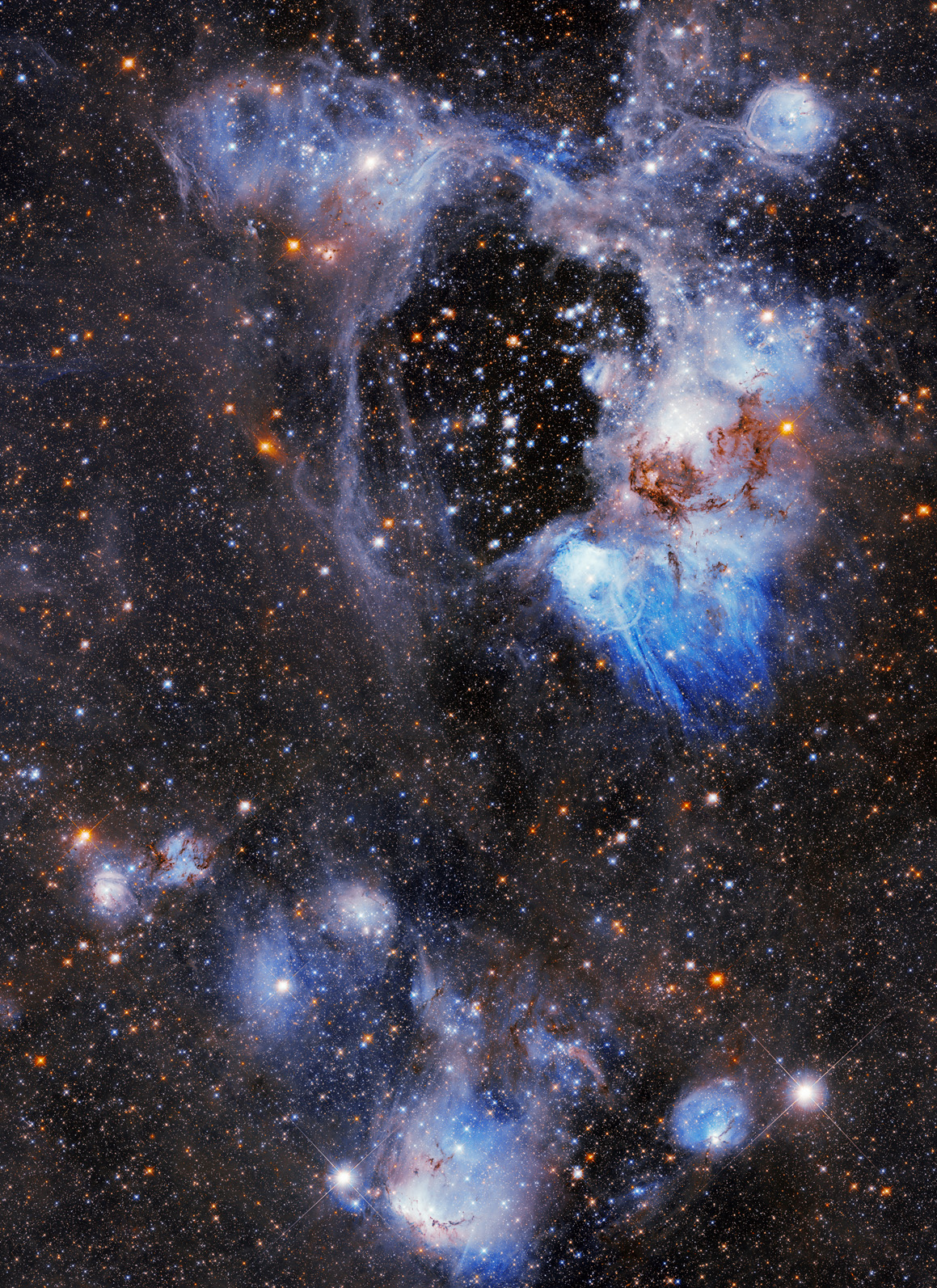
NASA’s Hubble Space Telescope captures a photogenic nebula, N44, in the Large Magellanic Cloud in this Sept. 3, 2026, image. N44 is dominated by two features: a vast central void and a shell of dense, dusty gas. The central void is a ‘superbubble’ spanning roughly 210 by 140 light-years across. The glittering stars at the […]
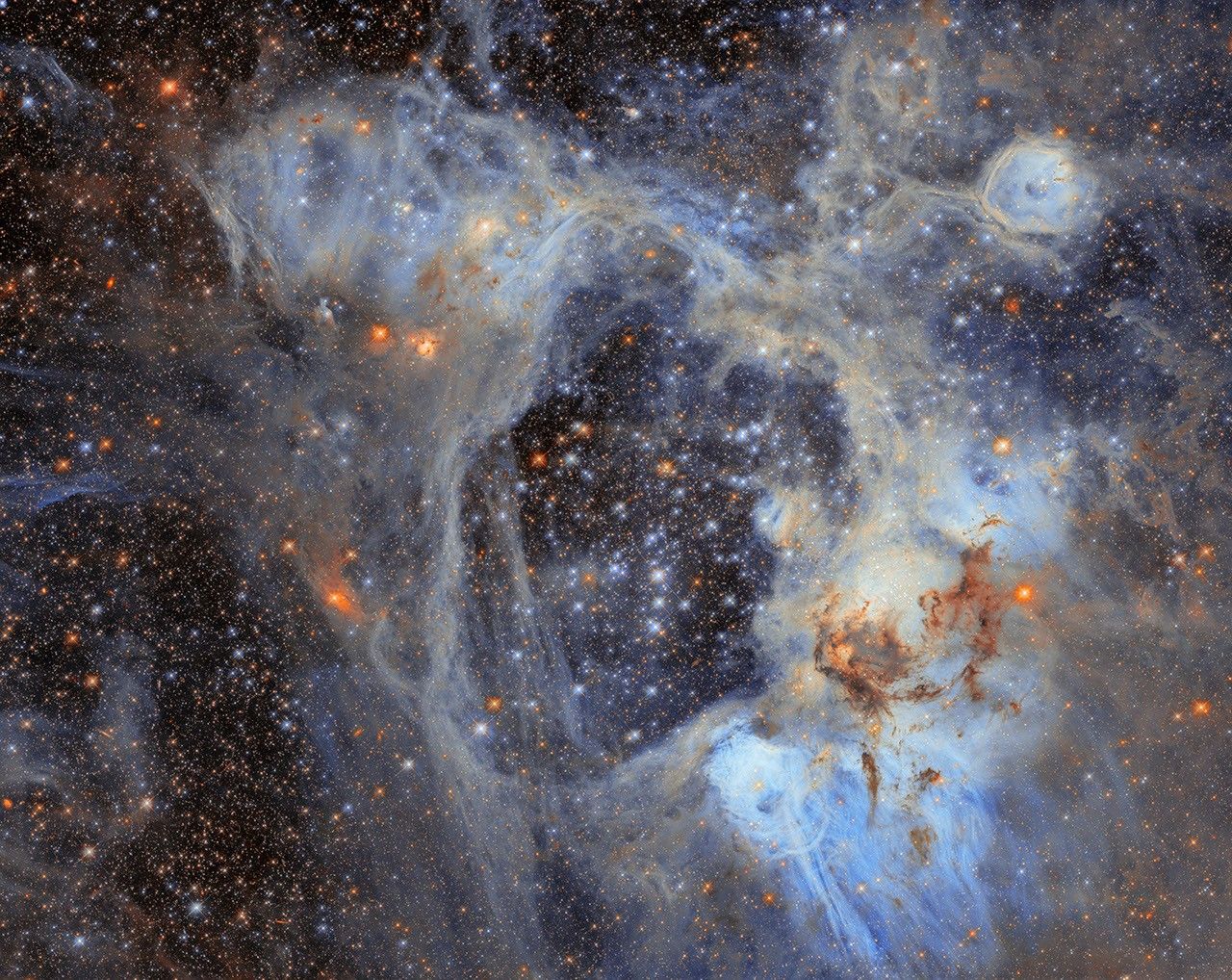
This Hubble Space Telescope image features a sprawling cosmic vista called N44.
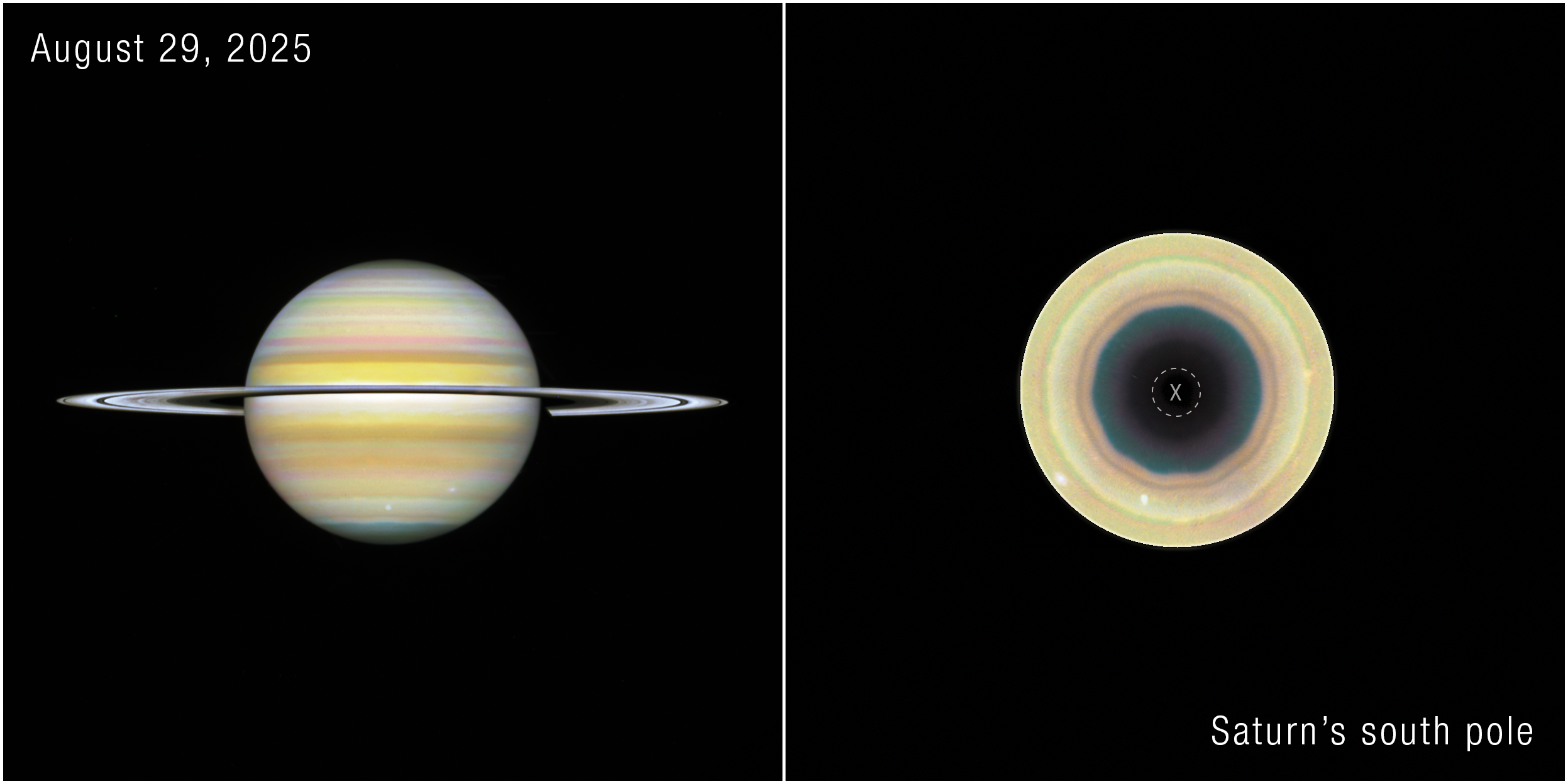
NASA’s Hubble Space Telescope observes a giant, evolving, 10-sided atmospheric wave encircling Saturn’s south pole.
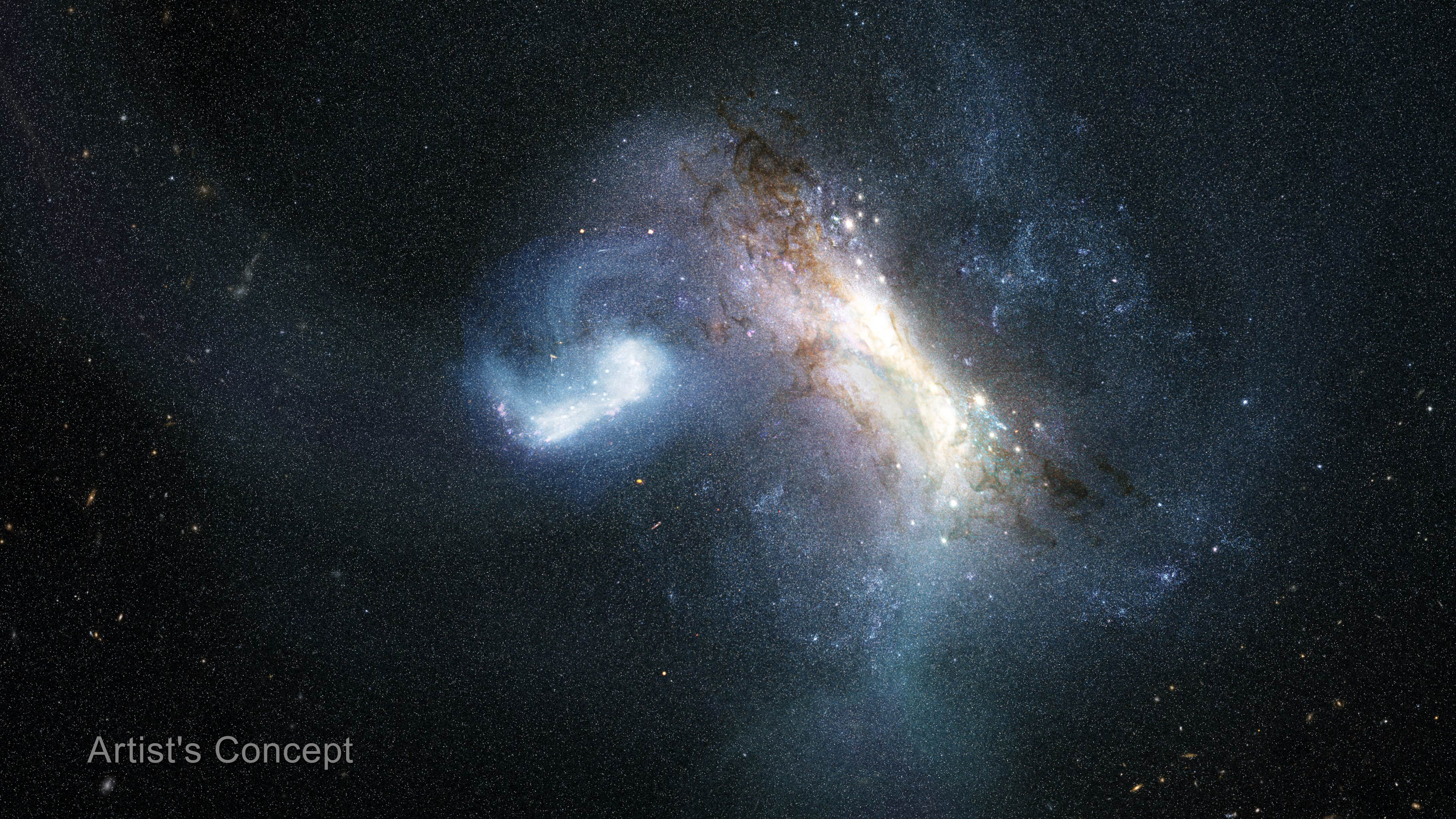
This artist’s concept, released on Aug. 17, 2026, depicts a collision between our Milky Way galaxy and a dwarf galaxy known as LKH that happened about 12 billion years ago. A study of data from NASA’s Hubble Space Telescope, recently published in the journal Nature Astronomy, shows definitive evidence of a dwarf galaxy merging with the young […]
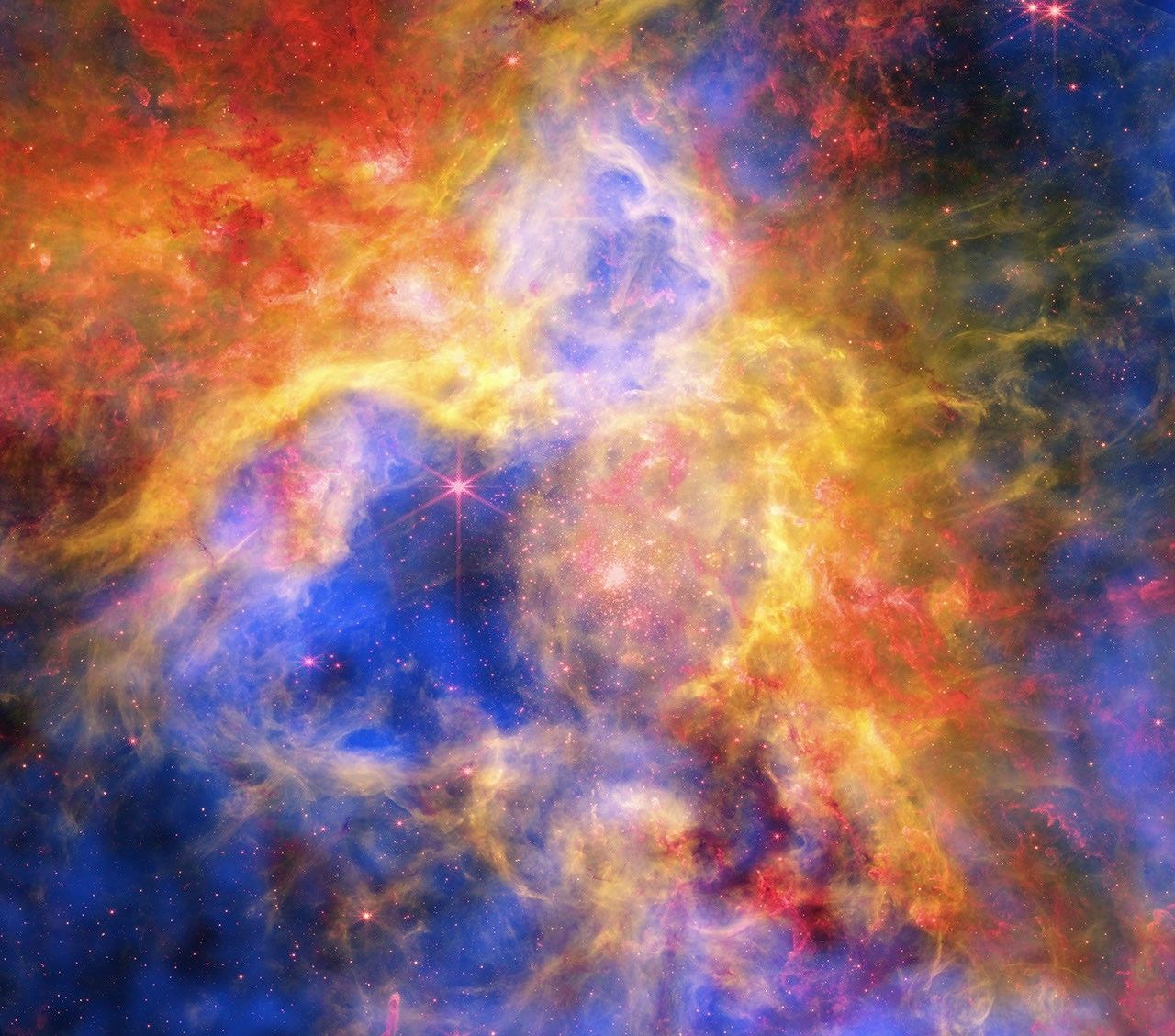
Data from NASA’s Chandra X-ray Observatory, NASA’s James Webb Space Telescope, and NASA’s Hubble Space Telescope combine to reveal a vibrant view of 30 Doradus, or the Tarantula Nebula, in this Aug. 11, 2026, image. Located in the Large Magellanic Cloud, a small neighbor galaxy to the Milky Way about 160,000 light-years from Earth, the […]

Our home galaxy, the Milky Way, grew to its current size in part by consuming smaller galaxies. Now, new data from the NASA/ESA Hubble Space Telescope show definitive evidence of a dwarf galaxy merging with the young Milky Way galaxy in the earliest phases of its evolution. This finding extends our knowledge of our galaxy’s history 1.8 billion years farther back in time than before.
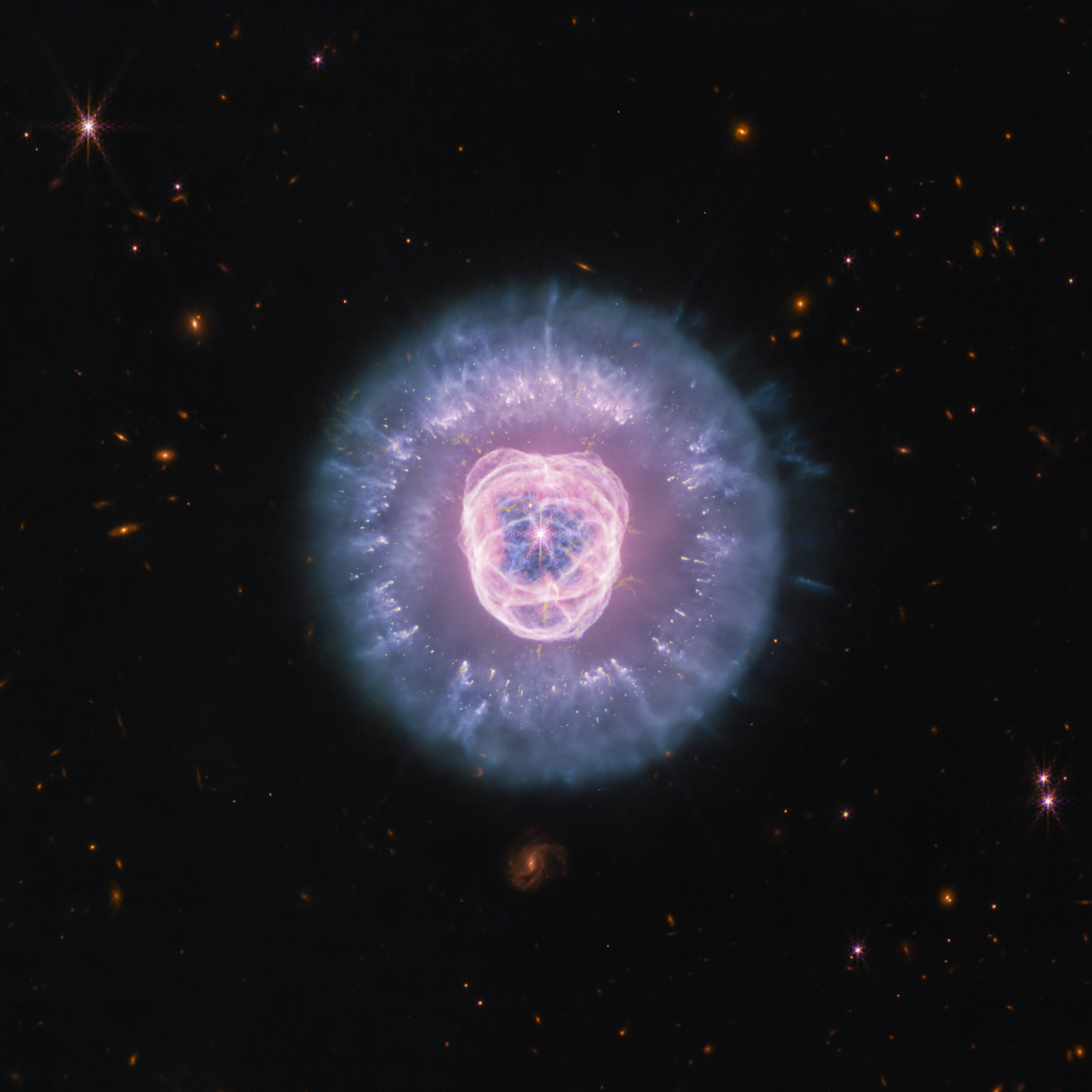
Observing across the starry “plains” of space, NASA’s James Webb Space Telescope has taken new images of NGC 2392, nicknamed the Lion Nebula. NASA’s Hubble Space Telescope previously viewed this planetary nebula in 2000, imaging the lion face-shaped target in visible light and revealing features such as the “mane” of hazy, comet-shaped objects. Now Webb […]
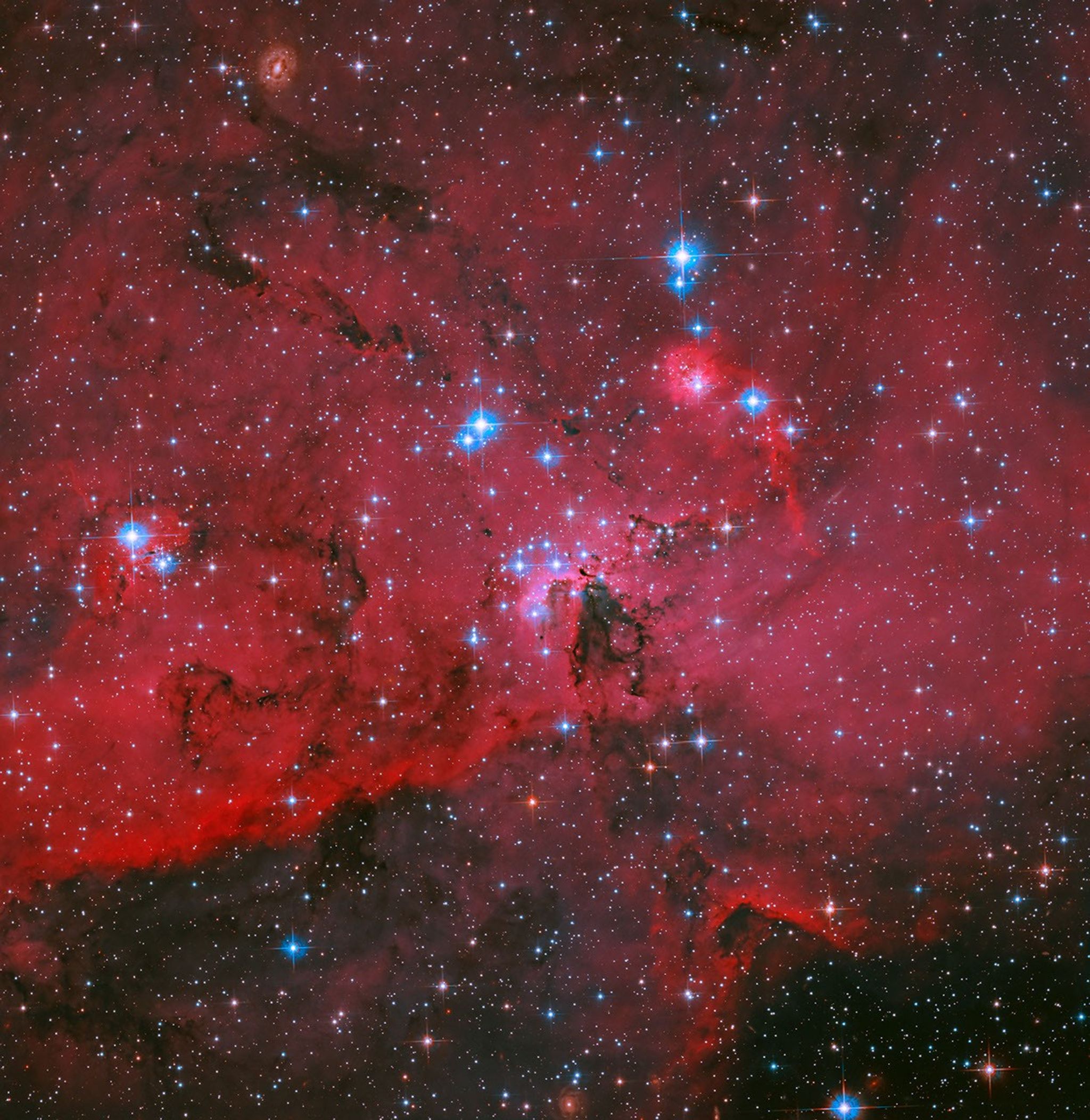
Blue and white stars shine brilliantly against a crimson background of glowing gas in this July 3, 2026, image of stellar nursery LH 95 from NASA’s Hubble Space Telescope. LH 95 is a region in the Large Magellanic Cloud, a dwarf galaxy that orbits the Milky Way. Low-mass infant stars live alongside massive blue giant stars in […]
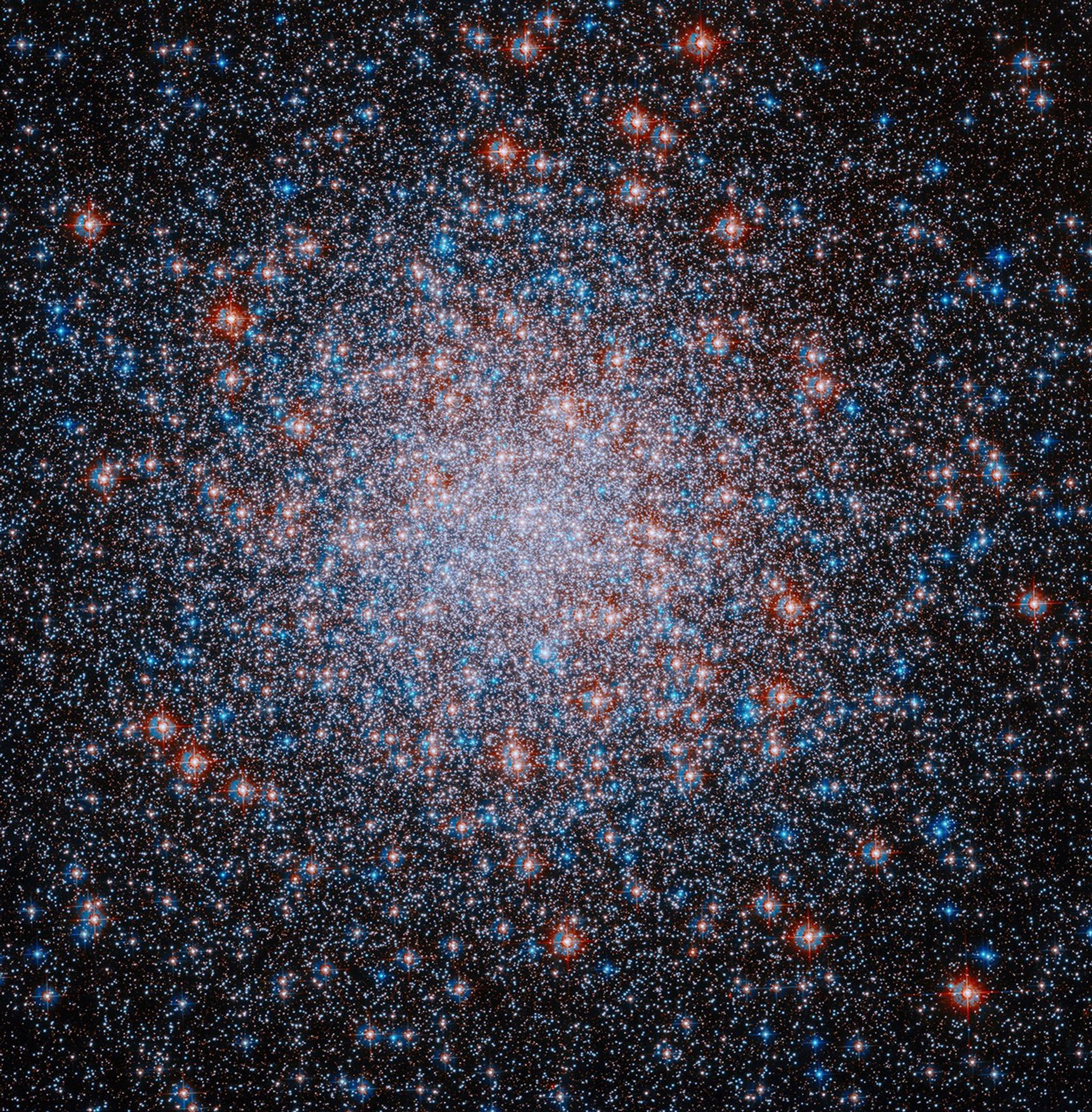
This image from NASA’s Hubble Space Telescope showcases Messier 3 (M3), one of the Milky Way galaxy’s most massive globular clusters, or spherical collections of gravitationally bound stars. Globular clusters are made up of ancient stars that formed at roughly the same time from the same cloud of gas, giving those stars similar ages. Around 150 known globular clusters are […]
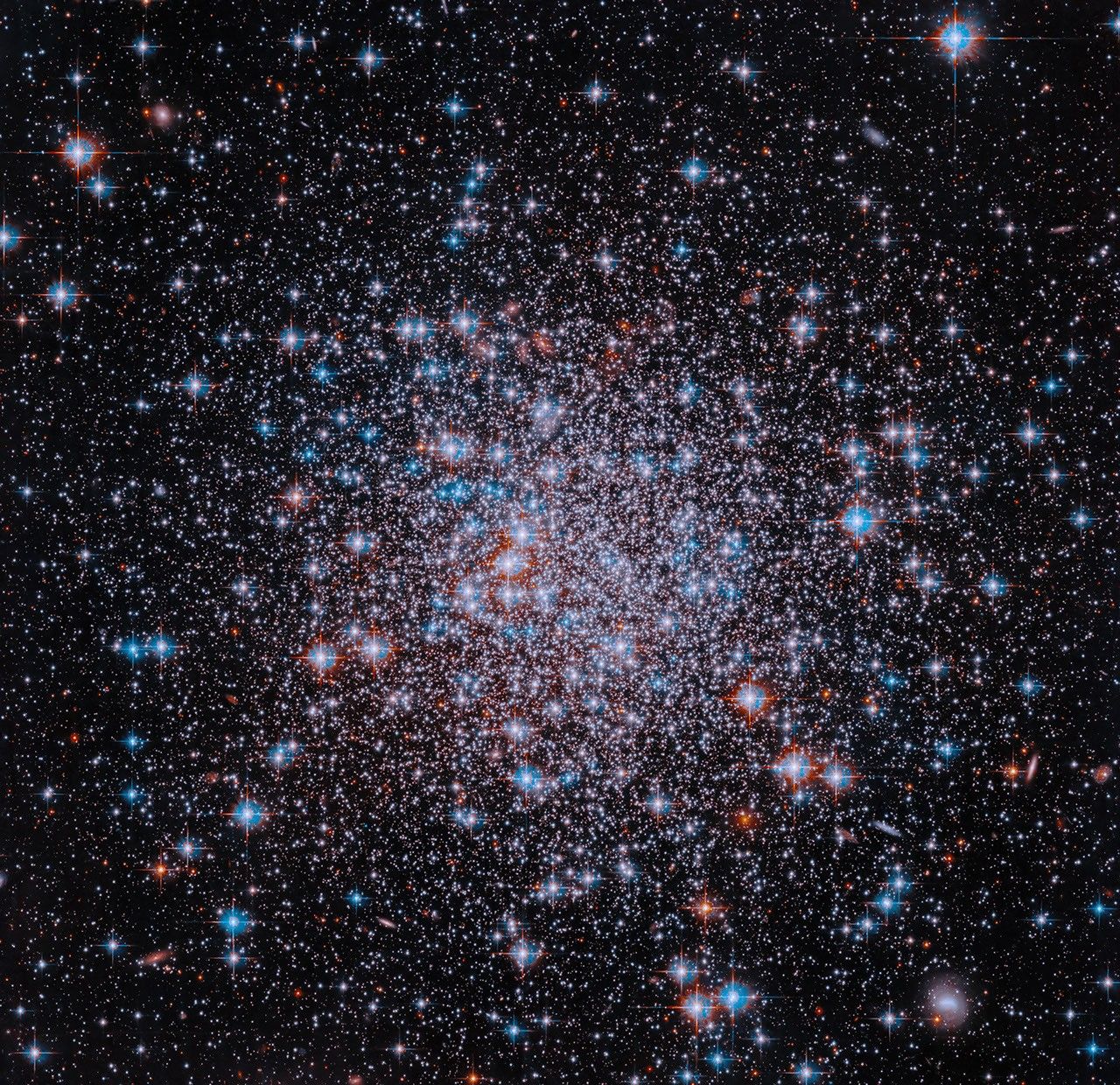
Red, white, and blue stars glitter like a sparkler being waved on a dark night in this new image from NASA’s Hubble Space Telescope.
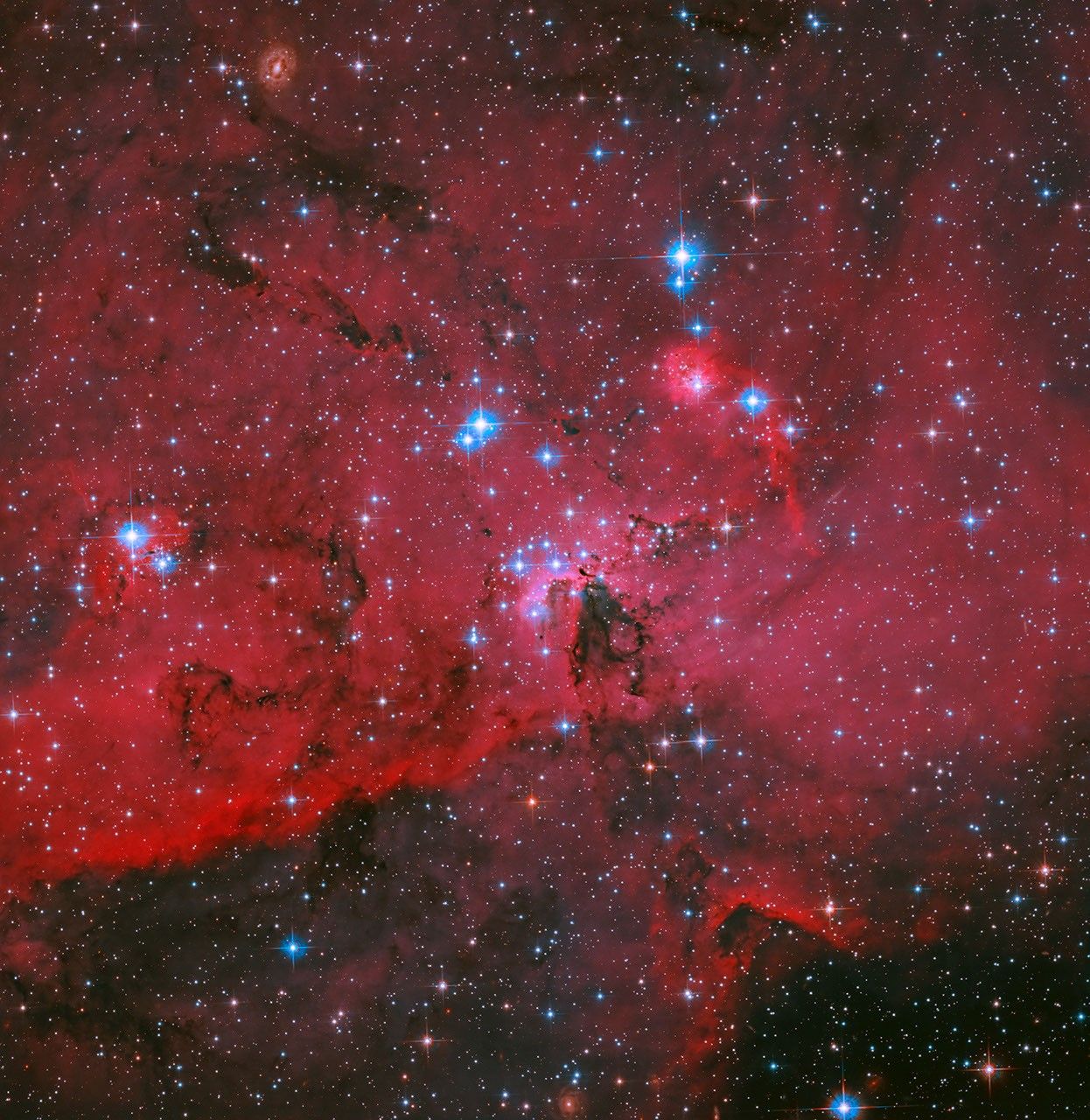
Blue and white stars shine brightly against crimson gas in this image from NASA’s Hubble Space Telescope.

NASA’s James Webb Space Telescope recently observed edge-on starburst galaxy Messier 82 (M82), nicknamed the Cigar Galaxy. Webb’s new view of M82, added to archival data from NASA’s Hubble Space Telescope, gives us a more complete picture of this starburst galaxy. Because Webb can see infrared light, it is able to peer through clouds of […]