H-IIA 204
SuccessInmarsat-6 F1 · Mitsubishi Heavy Industries
The launch vehicle successfully inserted its payload(s) into the target orbit(s).
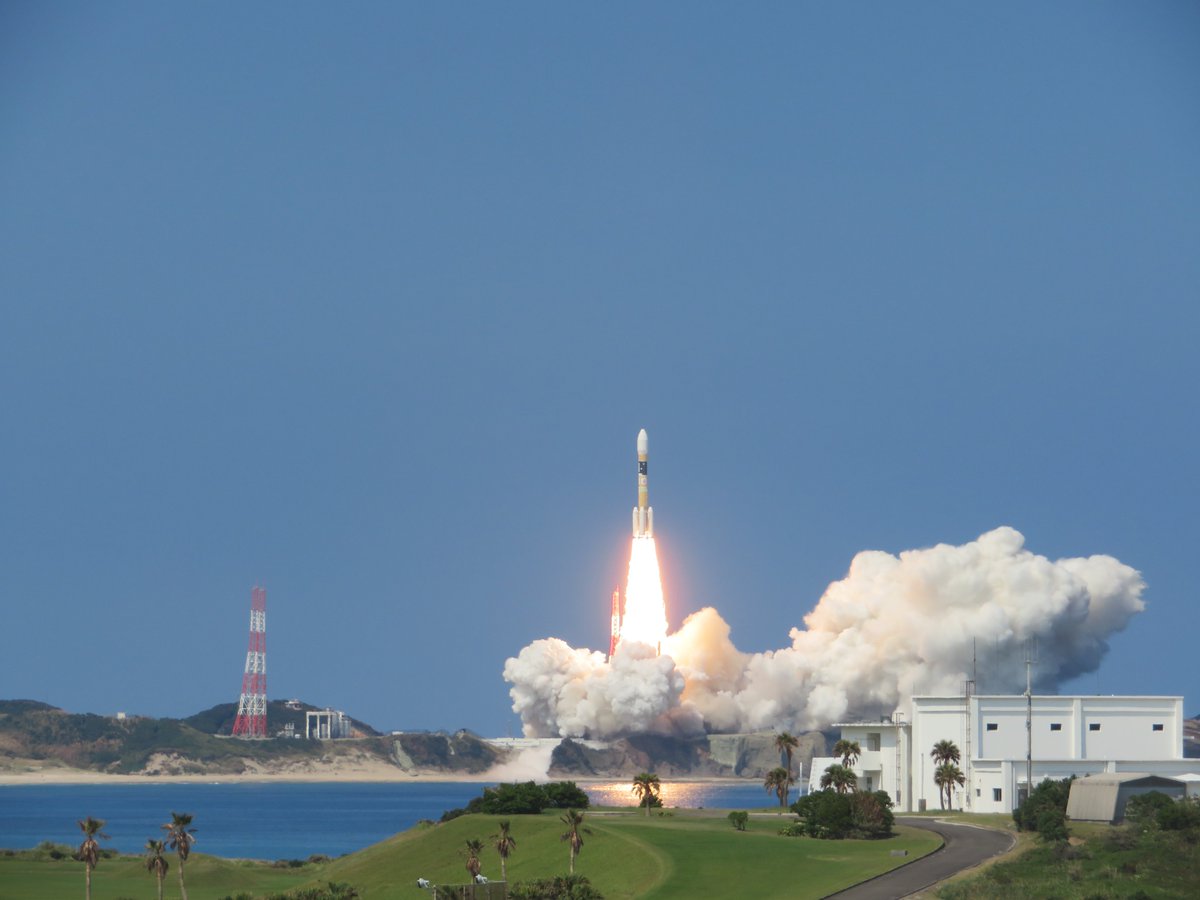
Inmarsat-6 is the sixth generation of satellites for the London-based global mobile satellite communications operator Inmarsat. It consists of a dual mission to augment both L-band and Ka-band Global Xpress services. Airbus Defence and Space has been awarded a contract by Inmarsat to design and develop the first two Inmarsat-6 (I-6) mobile communications satellites, creating the most versatile mobile services satellites in its fleet. The two I-6 satellites are based on Airbus Defence and Space's Eurostar platform in its E3000e variant, which exclusively uses electric propulsion for orbit raising. The satellites take advantage of the reduction in mass that this electric propulsion technology enables for a dual payload mission, with an exceptionally large next generation digitally processed payload. I-6 F1 and F2 both carry a large 9 m aperture L-band antenna and nine multibeam Ka-band antennas, and feature a high level of flexibility and connectivity. A new generation modular digital processor provides full routing flexibility over up to 8000 channels and dynamic power allocation to over 200 spot beams in L-band. Ka-band spot beams are steerable over the full Earth disk, with flexible channel to beam allocation.
Go to payload page →📡 Livestreams & webcasts


🎬 Recent videos
No recent videos found — this row stays empty until something new appears.
📰 News
Das Nancy-Grace-Roman-Weltraumteleskop befindet sich nun auf einer dreimonatigen Reise über eineinhalb Millionen Kilometer zu seiner endgültigen Umlaufbahn und wird bald die dunkelsten Geheimnisse des Universums enthüllen. Die Mission startete am Sonntag um 13:26 Uhr MESZ an Bord einer SpaceX-Falcon-Heavy-Rakete vom Startkomplex 39A im Kennedy Space Center der NASA in Florida.Eine Pressemitteilung
Das Nancy Grace Roman Space Teleskop der NASA ist bereit zum Start. Der Launch Rediness wurde mit „Go for Launch“ abgeschlossen. Inzwischen steht die Falcon Heavy von SpaceX mit dem Teleskop auf der Startrampe am Startplatz 39A. Der Start ist für morgen (30.08.2026) um 13:25 Uhr MESZ geplant. Der Beitrag 29. 8. 2026 – Nancy Grace Roman Space Teleskop bereit zum Start erschien zuerst auf Raumfahrer
Am 27. Juli wurde im KSC eine Speicherkarte mit 1.350.144 Namen an einer Gedenktafel am Nancy-Grace-Roman-Weltraumteleskop angebracht. Die Speicherkarte wird mit dem Teleskop zum Lagrange-Punkt 2 (L2) des Sonne und Erde Systems fliegen. Der Start ist derzeit für Sonntag, den 30. August, um 13:26 Uhr MESZ mit einer SpaceX Falcon Heavy vom Startkomplex 39A des […] Der Beitrag 31. 7. 2026 – 1,35 Mill