Falcon Heavy
SuccessNancy Grace Roman Space Telescope · SpaceX
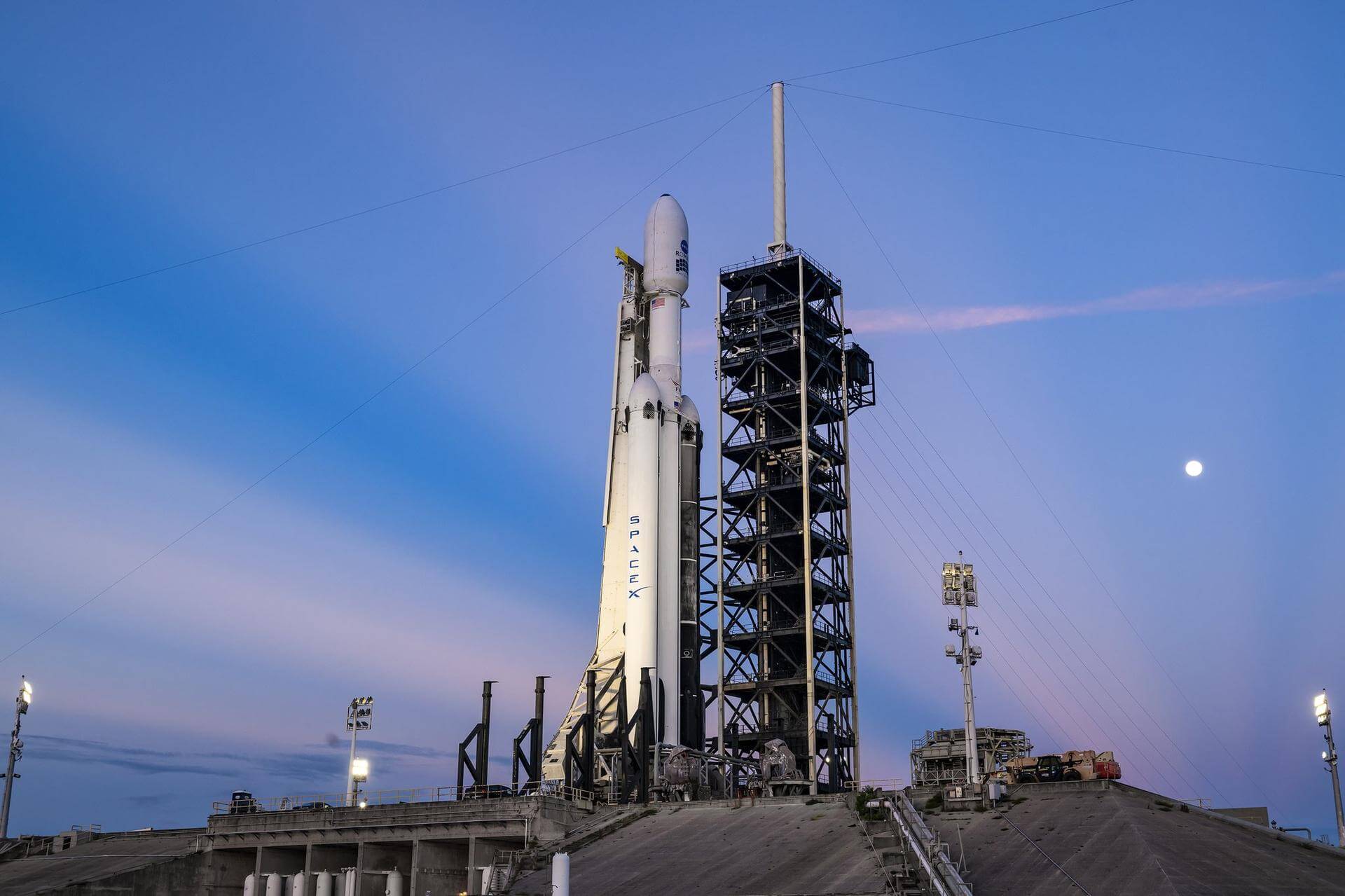
The launch vehicle successfully inserted its payload(s) into the target orbit(s).
🔀 Schedule history (5 changes)
- Sunday, Aug 30, 2026, 11:20 UTC → Sunday, Aug 30, 2026, 11:26 UTC
- Sunday, Aug 30, 2026, 11:26 UTC → Sunday, Aug 30, 2026, 11:25 UTC
- Sunday, Aug 30, 2026, 11:25 UTC → Sunday, Aug 30, 2026, 11:26 UTC
- Sunday, Aug 30, 2026, 11:26 UTC → Sunday, Aug 30, 2026, 11:25 UTC
- Sunday, Aug 30, 2026, 11:25 UTC → Sunday, Aug 30, 2026, 11:26 UTC
The Nancy Grace Roman Space Telescope is a NASA infrared space telescope with a 2.4 m (7.9 ft) wide field of view primary mirror and two scientific instruments. The Wide-Field Instrument (WFI) is a 300.8-megapixel multi-band visible and near-infrared camera, providing a sharpness of images comparable to that achieved by the Hubble Space Telescope over a 0.28 square degree field of view, 100 times larger than imaging cameras on the Hubble. The Coronagraphic Instrument (CGI) is a high-contrast, small field of view camera and spectrometer covering visible and near-infrared wavelengths using novel starlight-suppression technology. Roman objectives include a search for extra-solar planets using gravitational microlensing, and probing the expansion history of the Universe and the growth of cosmic structure, with the goal of measuring the effects of dark energy, the consistency of general relativity, and the curvature of spacetime.
Go to payload page →📡 Livestreams & webcasts


🎬 Recent videos




🚀 About the rocket: Falcon Heavy






📰 News

The observatory will shed new light on the mystery of dark energy, observe distant exoplanets, and explore the structure of the universe.
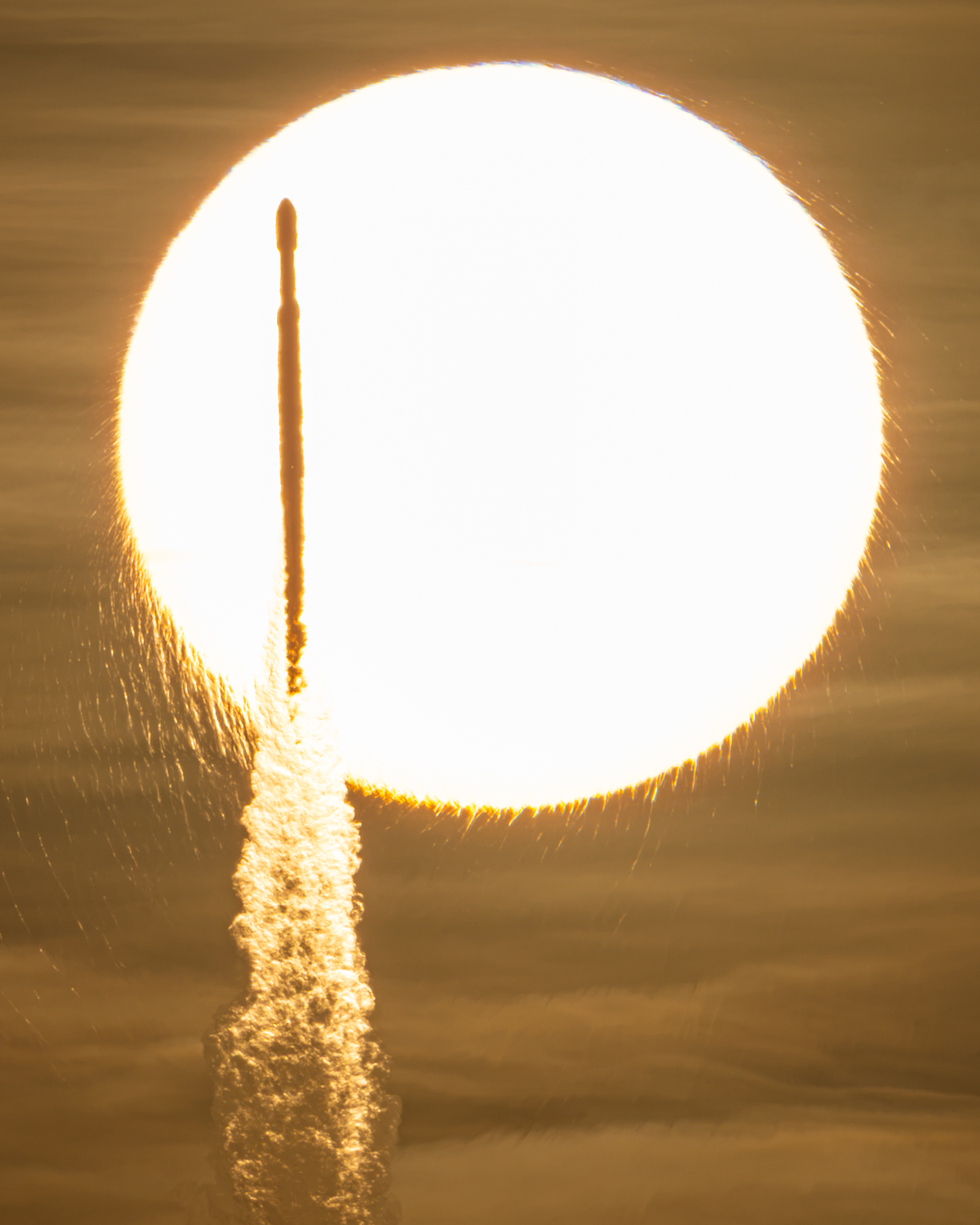
NASA’s Nancy Grace Roman Space Telescope, aboard a SpaceX Falcon Heavy rocket, transits the Sun during launch from the agency’s Kennedy Space Center in Florida on Aug. 30, 2026. Roman is named after the agency’s first chief astronomer. Roman will survey billions of stars and galaxies with a field of view far larger than Hubble’s, […]

NASA’s Nancy Grace Roman Space Telescope lifted off on a SpaceX Falcon Heavy rocket from NASA’s Kennedy Space Center in Florida, USA, at 07:26 EDT / 12:26 BST/ 13:26 CEST on 30 August 2026. With the successful launch, Roman began its mission to survey the sky in visible to near-infrared light to help reveal the nature of dark energy and dark matter. The telescope will also investigate the true diversity of exoplanets in our galaxy.

Using a donated Hubble-class mirror originally built for a spy satellite, NASA's Roman Space Telescope is poised for launch Sunday on a $4.3 billion mission to open a new window on the universe. Liftoff from the Kennedy Space Center atop a SpaceX Falcon Heavy is scheduled for 7:26 a.m. EDT (1126 UTC).
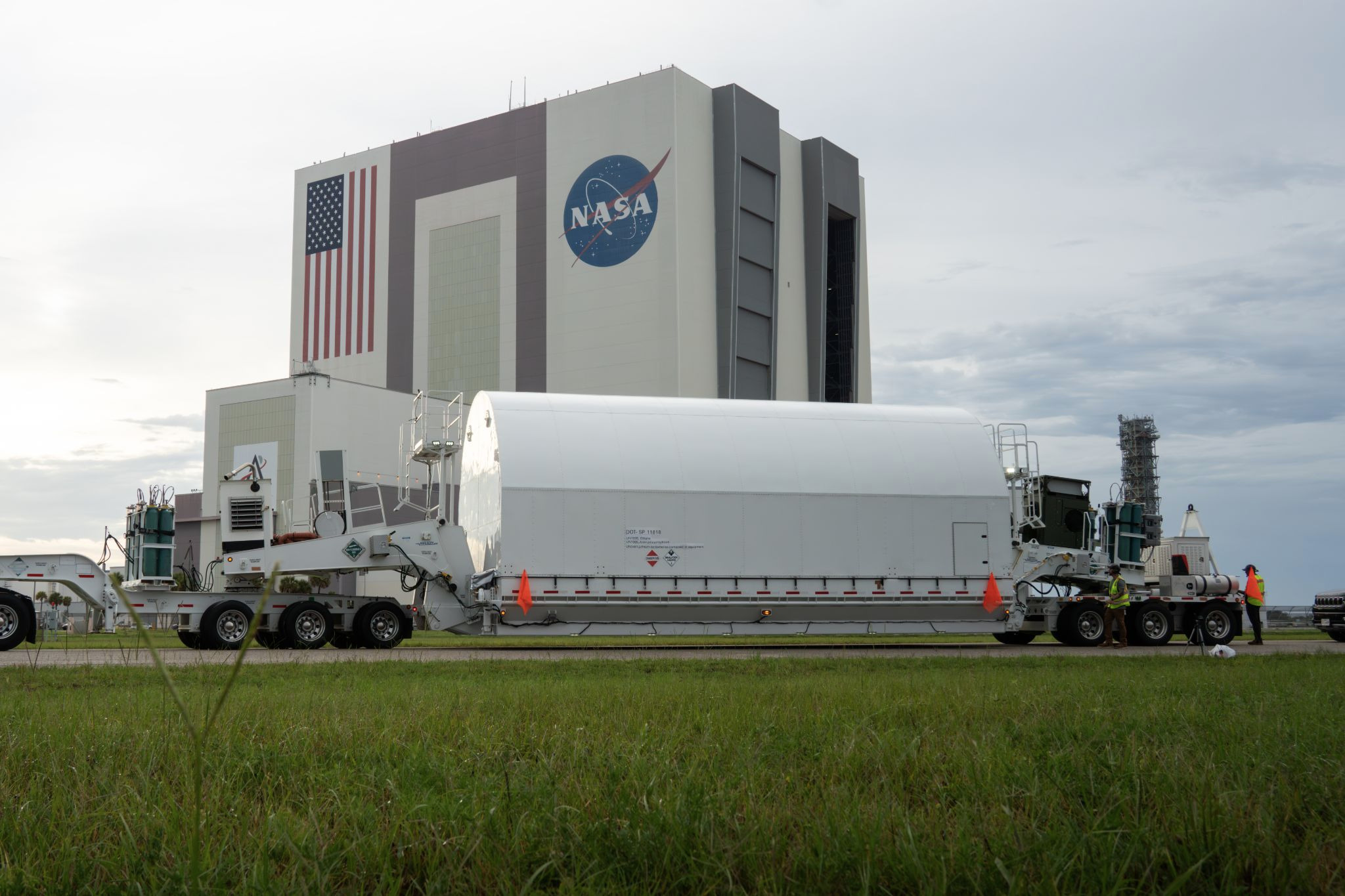
Under budget and ahead of schedule, the Nancy Grace Roman Space Telescope has crossed another milestone in its journey to the stars.
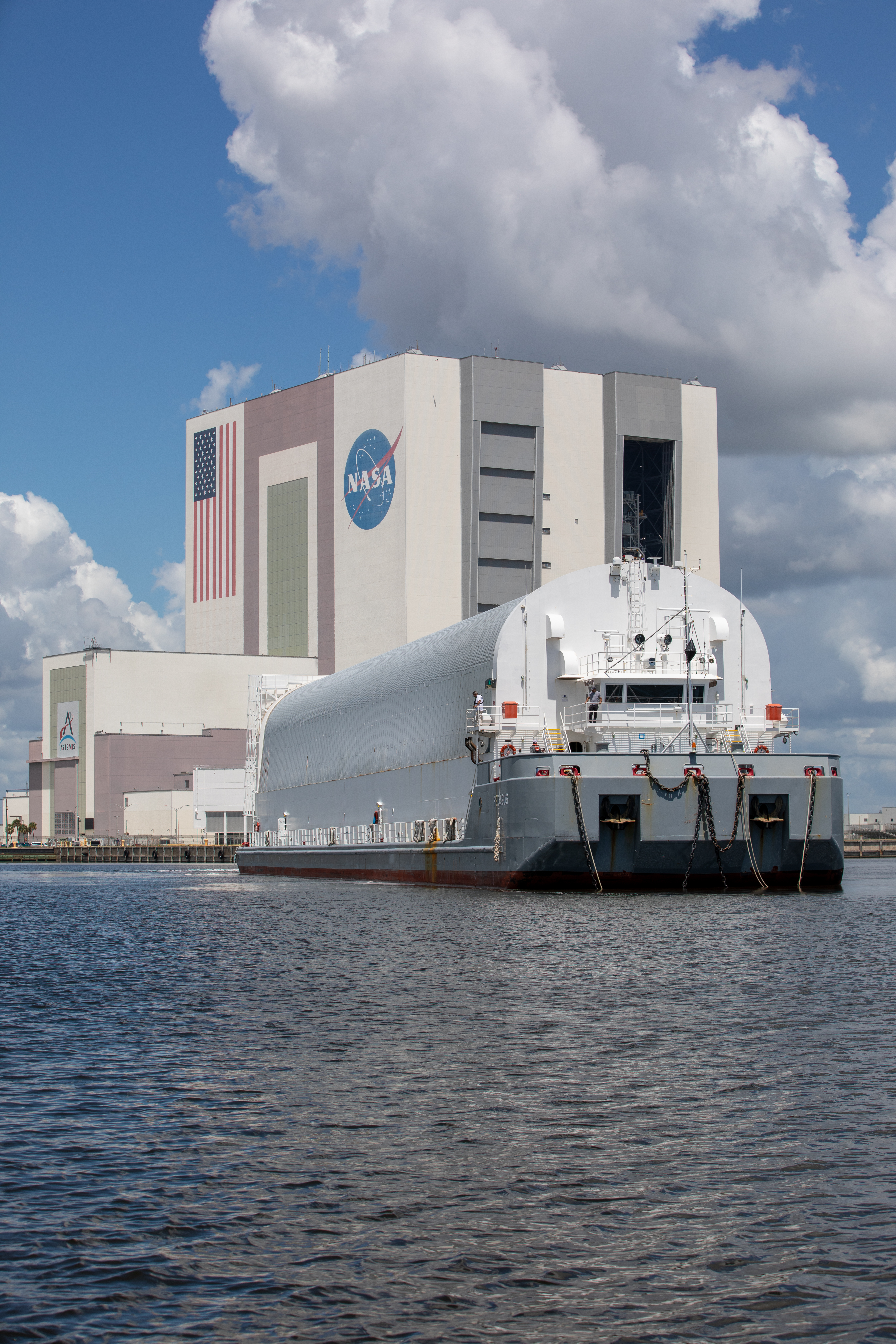
In this June 21, 2026, photo, NASA’s Nancy Grace Roman Space Telescope arrives at the agency’s Kennedy Space Center in Florida aboard NASA’s Pegasus barge. After offloading and transportation to the spaceport’s Payload Hazardous Servicing Facility, Roman will undergo processing ahead of launch, targeted no earlier than Sunday, Aug. 30, 2026. Named for NASA’s first […]
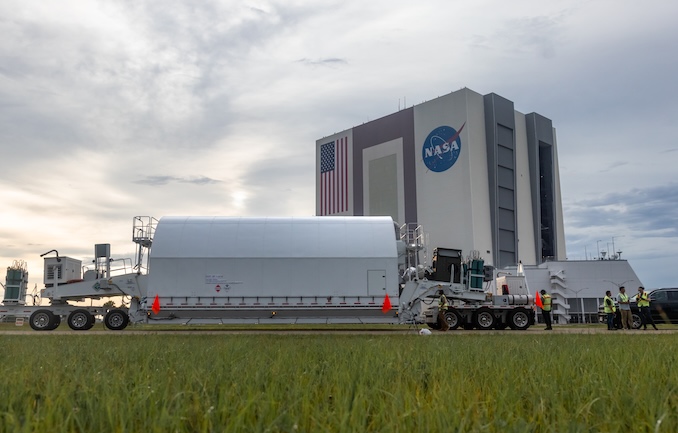
The $4.3 billion observatory will go through about 70 days of prelaunch processing at NASA's Kennedy Space Center before it launches on a SpaceX Falcon Heavy rocket no earlier than August 30.
Are you ready for a new view of the universe? The Nancy Grace Roman Space Telescope will reveal distant worlds, dark energy, and the structure of the cosmos, and we want you to be a part of it! Digital creators and social media users are invited to register to our NASA Social for the Nancy […]
Der erfolgreiche Start markiert einen Meilenstein in der Raumfahrt Europas, auch wenn es bis zum zweiten Start der Spectrum wesentlich länger dauerte, als es ursprünglich anvisiert war. Mit diesem Start konnte nicht nur das Ziel höher und weiter bewältigt werden, als erstes der neu angetretenen privaten Raumfahrtunternehmen Europas hat Isar Aerospace mit ihrer eigenen Trägerrakete […] Der Beitrag
Isar Aerospace hat den 2. Testflug der „Spectrum“-Rakete für heute Abend angekündigt. Um (frühestens) 22:00 Uhr MESZ soll die Rakete vom norwegischen Weltraumbahnhof „Andøya“ abheben, vorbehaltlich dem Wetter, der Sicherheit und der Reichweite. An Bord sind 6 Nutzlasten: 5 CubeSats und 1 Experiment für das „Boost!“-Programm der ESA, das nicht von der Oberstufe getrennt wird. […] Der Beitrag 5. 9.
Am 1. September Abend feierten die Europäische Weltraumorganisation (ESA) und ispace-Europe im Rahmen einer Unterzeichnungszeremonie bei der Veranstaltung „Space for Inspiration“ in Kopenhagen, Dänemark, den Startschuss für MAGPIE, den ersten europäischen Rover auf dem Mond.Eine Pressemitteilung der Europäischen Weltraumagentur ESA. Quelle: ESA / Science & Exploration / Human and Robotic Explorati
Die chinesische Firma Galactic Energy konnte ihren Träger Pallas-1 bei ihrem ersten Flug heute um 4 Uhr von der „Dongfeng commercial space innovation pilot zone“ erfolgreich starten. Der Junfernflug erfolgte ohne Nutzlast, bis zu 5 Tonnen sollen in einen LEO transportiert werden können. Die erste Stufe des RP-1/LOX betriebenen zweistufigen Trägers soll in Zukunft mithilfe […] Der Beitrag 1. 9. 202