Falcon Heavy
SuccessPsyche · SpaceX
The launch vehicle successfully inserted its payload(s) into the target orbit(s).
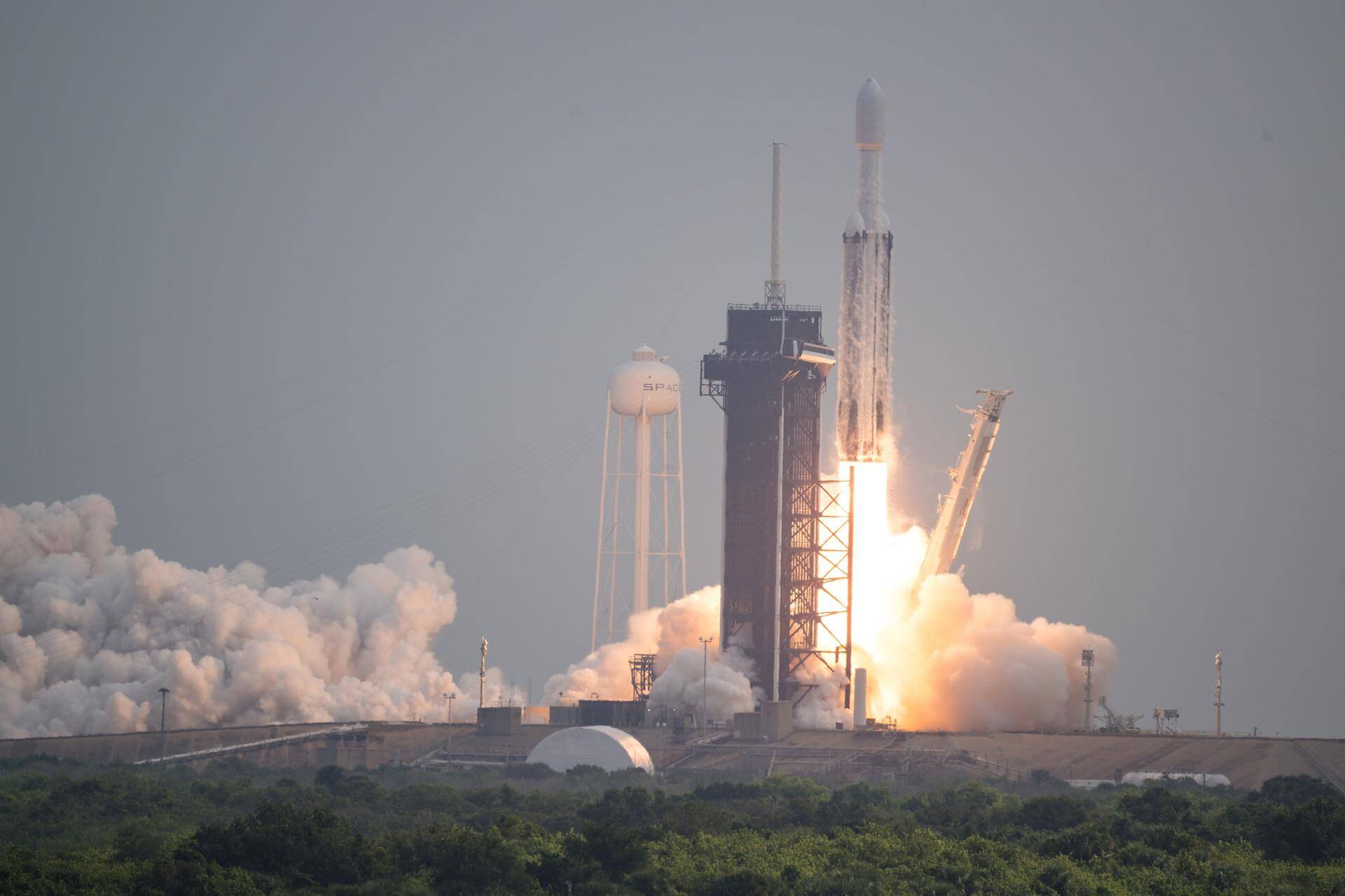
Psyche is a NASA interplanetary mission to visit the main belt asteroid of the same name, 16 Psyche. Spacecraft will take 4 years and one Mars flyby to reach the asteroid, which is of particular interest due to being comprised mostly of iron and nickel. Psyche is theorized to be a remnant of an early planet's core, and may offer insights into how solar system formed and evolved. The mission is led by Arizona State University, with NASA JPL being responsible for mission management and operations.
Zur Nutzlast-Seite →📡 Livestreams & Webcasts

🎬 Aktuelle Videos
Keine aktuellen Videos gefunden — diese Zeile bleibt leer, bis es Neues gibt.
🚀 Über die Rakete: Falcon Heavy





📰 News
Das Nancy-Grace-Roman-Weltraumteleskop befindet sich nun auf einer dreimonatigen Reise über eineinhalb Millionen Kilometer zu seiner endgültigen Umlaufbahn und wird bald die dunkelsten Geheimnisse des Universums enthüllen. Die Mission startete am Sonntag um 13:26 Uhr MESZ an Bord einer SpaceX-Falcon-Heavy-Rakete vom Startkomplex 39A im Kennedy Space Center der NASA in Florida.Eine Pressemitteilung
Das Nancy Grace Roman Space Teleskop der NASA ist bereit zum Start. Der Launch Rediness wurde mit „Go for Launch“ abgeschlossen. Inzwischen steht die Falcon Heavy von SpaceX mit dem Teleskop auf der Startrampe am Startplatz 39A. Der Start ist für morgen (30.08.2026) um 13:25 Uhr MESZ geplant. Der Beitrag 29. 8. 2026 – Nancy Grace Roman Space Teleskop bereit zum Start erschien zuerst auf Raumfahrer
SpaceX soll rund 500 km² Land auf „Pecan Island“ übernehmen, einem Landstrich an der Golfküste von Süd-Louisiana. Das auf 100 Milliarden Dollar bezifferte Projekt würde Louisiana zu einem der wichtigsten Standorte der US-amerikanischen Raumfahrt machen. Der Standort befindet sich zwischen den bestehenden SpaceX-Standorten in Texas und Florida und soll Kapazitäten für einen stark wachsenden Starshi
Der Halbtaucher Forte hat nahe von Flying Fish Cove auf der Weihnachtsinsel Ship 40 vom Testflug 13 von SpaceX, mittels Absenken des Schiffes auf eine Höhe bei der die Ladezone unter der Wasseroberfläche liegt, an Board genommen. Ship 40 soll damit bis Starbase Texas zurückgebracht werden. Der Beitrag 26. 8. 2026 – Ship 40 wurde auf das Schwerlastschiff Forte verladen erschien zuerst auf Raumfahre
Eine Klage gegen ExxonMobil wegen Küstenschäden wurde beendet, womit der Weg frei ist für neue Nutzungsrechte von 526 km2 Fläche auf Pecan Island.Lousianas Gouverneur Jeff Landry lädt nächste Woche Hunderte von gewählten Amtsträgern und Wirtschaftsführern ein, wo er bekannt geben dürfte, dass Elon Musks Unternehmen SpaceX plant, einen mehrere Milliarden Dollar teuren Weltraumbahnhof auf einem […]

Zwischen dem 11. und 12. August nahm der Lunar Reconnaissance Orbiter der NASA eine Reihe von Bildern eines neuen Kraters auf dem Mond auf. Der Krater entstand am 5. August, als eine Oberstufe der SpaceX Falcon 9 nach dem Start der Mission „Firefly Blue Ghost M1“ im Januar 2025 auf der Mondoberfläche aufschlug.Eine Pressemitteilung der […] Der Beitrag LRO fotografiert den Falcon-9-Krater auf dem M
Beim ersten Versuch, am 3. Dezember des Vorjahres, den Booster der Zhouque-3 Rakete mit dem selben Verfahren wie die Falcon 9 von SpaceX zu landen, gab es noch einen Einschlag knapp neben dem Landepad. Nun konnte die chinesische Firma Landspace beim zweiten Versuch den Booster ihrer Zhouque-3 Rakete erfolgreich landen. Mit Landspace aus Peking gibt […] Der Beitrag 19. 8. 2026 – Landspace landet er
Normand Ranger und GO Australis Ship sind mit Ship 40 mittlerweile in der Bucht vor Flying Fish Cove auf der Weihnachtsinsel angekommen. Ingenieure von SpaceX sind auf dem Weg dorthin um Ship 40 zu untersuchen. Nach Angabe von SpaceX soll versucht werden Ship 40 nach Starbase zurück zu bringen. Der Beitrag 18. 8. 2026 – Ship 40 hat die Weihnachtsinsel erreicht erschien zuerst auf Raumfahrer.net .
Je nach Schleppgeschwindigkeit, die bei 2 bis 2,7 Knoten liegt soll das Gespann aus Normand Ranger, GO Australis und der Oberstufe des SpaceX Testfluges 13, Ship 40, morgen früh zwischen 2 und 5 Uhr am Pier von Flying Fish Cove auf der Weihnachsinsel ankommen. Der Beitrag 17. 8. 2026 – Nur noch wenige Stunden bis Ship 40 die Weihnachtsinsel erreicht erschien zuerst auf Raumfahrer.net .
Der Umsatz stieg gegenüber dem Vorjahr deutlich um 92% auf 7,8 Milliarden Dollar. Allerdings wird ein Verlust von 541 Millionen Dollar ausgewiesen. Ein Jahr davor waren es rund 1 Milliarde Dollar. Die Aktie fiel im nachbörslichen US-Handel um mehr als 7%. Der Beitrag 5. 8. 2026 – SpaceX legt erste Quartalszahlen nach Börsengang vor erschien zuerst auf Raumfahrer.net .
Am 27. Juli wurde im KSC eine Speicherkarte mit 1.350.144 Namen an einer Gedenktafel am Nancy-Grace-Roman-Weltraumteleskop angebracht. Die Speicherkarte wird mit dem Teleskop zum Lagrange-Punkt 2 (L2) des Sonne und Erde Systems fliegen. Der Start ist derzeit für Sonntag, den 30. August, um 13:26 Uhr MESZ mit einer SpaceX Falcon Heavy vom Startkomplex 39A des […] Der Beitrag 31. 7. 2026 – 1,35 Mill
(Updated) Ship 40 treibt viel länger als erwartet auf der Wasseroberfläche. Hatte Booster 20 nicht erst beim Landingburn mit Problemen zu kämpfen? Ein Portalbeitrag des Raumfahrer.net Redakteurs James Quelle: SpaceX Livestream, X Ship 40 ist zumindest noch die ganze Nacht nach der Wasserung auf der Wasseroberfläche getrieben. Der Hochseeschlepper „Go Australis“ folgte Ship 40 in […] Der Beitrag Mi