Atlas SLV-3C Centaur
SuccessCopernicus · United States Air Force
The launch vehicle successfully inserted its payload(s) into the target orbit(s).
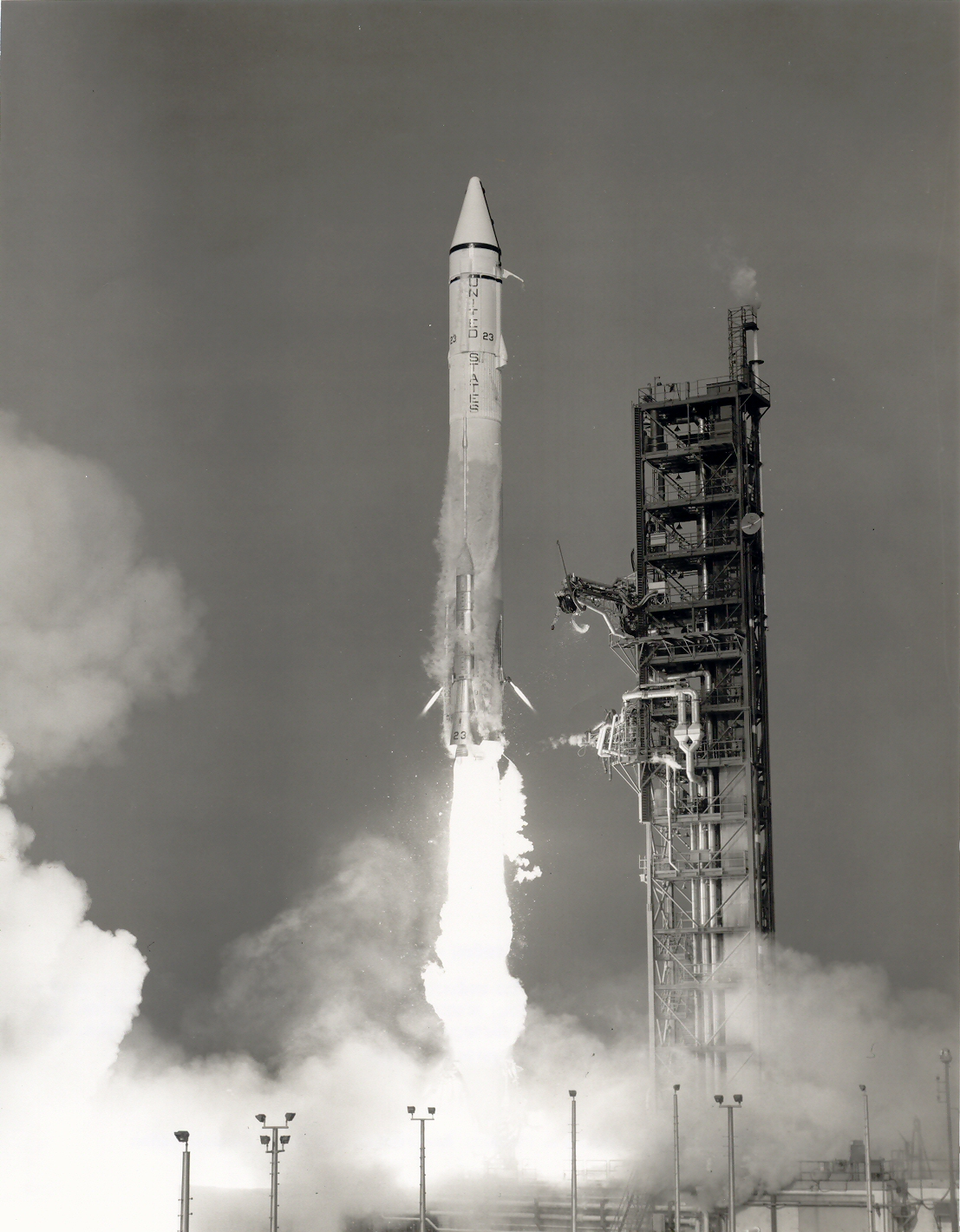
Third Orbiting Astronomical Observatory satellite, equipped with an UV telescope and three X-ray telescopes.
Zur Nutzlast-Seite →🎬 Aktuelle Videos
Keine aktuellen Videos gefunden — diese Zeile bleibt leer, bis es Neues gibt.
🚀 Über die Rakete: Atlas SLV-3C Centaur









📰 News
Die europäische Copernicus-Sentinel-1-Mission hat eine dramatische Veränderung am Petermann Gletscher im Nordwesten Grönlands erfasst, wo sich am 4. August 2026 ein 76 km² großer Teil der schwimmenden Gletscherzunge abgelöst hat. Dieses Ereignis stellt den größten Verlust an schwimmendem Eis des Gletschers seit 2012 und das bedeutendste Kalbungsereignis in der Arktis seit 2020 dar – und […] Der Be
Aufgrund einer schweren Dürre in Mitteleuropa ist der Wasserstand des Flusses in Ungarn auf einen Rekordtiefstand gesunken. Dürren und Hitzewellen sind jedoch zu einem wiederkehrenden Phänomen geworden, da seit 2018 an der Donau immer wieder Rekordtiefstände gemessen werden.Eine Pressemitteilung der Europäischen Weltraumagentur ESA. Quelle: ESA / Applications, 7. August 2026 Diese Copernicus-Senti

ESA’s state-of-the-art FLEX Earth Explorer satellite and the Copernicus Sentinel-3C satellite have been launched together aboard a Vega-C rocket from Europe’s Spaceport in French Guiana, marking a new milestone in Europe’s Earth Observation Programmes. Flight VV30 lifted off on 15 September at 03:21 (14 September at 22:21 local time).

The European Space Agency’s FLEX Earth Explorer satellite and the Copernicus Sentinel-3C satellite have been launched together aboard a Vega-C rocket from Europe’s Spaceport in French Guiana, marking a new milestone in Europe’s Earth Observation Programmes.

Two Earth observation satellites – ESA’s Fluorescence Explorer (FLEX) satellite, and the third satellite for the Copernicus Sentinel-3 mission – are encapsulated inside the nose cone of a Vega-C launcher and are awaiting liftoff at Europe’s Spaceport in French Guiana.

On 15 September, two spacecraft will leave Earth together aboard the same launcher from Europe’s spaceport in Kourou: FLEX, ESA’s photosynthesis mission, and Sentinel-3C, Copernicus’ newest satellite monitoring Earth’s oceans, land, ice and atmosphere.

Copernicus Sentinel-3 is one of the most diverse missions for measuring and monitoring Earth’s climate systems. It captures a breadth of data about the environment and has contributed substantially to what we know about climate change over the past decade. The launch of the mission’s third satellite heralds the continuity of this vital source of knowledge.

JOHANNESBURG — The European Union has ordered a 24-hour delay in the release of some Sentinel-1 and Sentinel-2 imagery following a request from the United States based on concerns that […] The post EU delays release of Copernicus imagery over Gulf of Oman appeared first on SpaceNews.

With liftoff scheduled for September, excitement is building at Europe’s Spaceport in French Guiana as two cutting-edge Earth observation satellites, FLEX and Copernicus Sentinel-3C, have arrived to begin their launch campaigns.

Thirty years after the European Space Agency first demonstrated the power of flying two satellites in very close formation, the concept was recently recreated. By temporarily positioning two Copernicus Sentinel-1 radar satellites to replicate the pioneering ERS-1–ERS-2 ‘tandem mission’, ESA achieved one-day repeat radar imaging of the same Antarctic region.

After 12 years of exceptional service, the pioneering Copernicus Sentinel-1A radar satellite has reached the end of its mission. Originally designed for a seven-year life in orbit, the satellite has exceeded expectations, not only by its longevity, but through the extraordinary impact of its data, which have deepened our understanding of our changing planet and supported a wide range of operational services and laid the foundation for scientific discoveries.

MILAN — Switzerland’s decision not to participate in the European Union’s Copernicus Earth observation program during the 2028–2034 funding cycle has revived a broader debate over the value of contributing […] The post Swiss decision to not contribute to Copernicus tests program’s value model appeared first on SpaceNews.