📊 Analyse
Statistiken & Insights zu Raketen und Organisationen — Technik, Geschichte, Zahlen.
Ariane 5 ES
Außer DienstArianeGroup
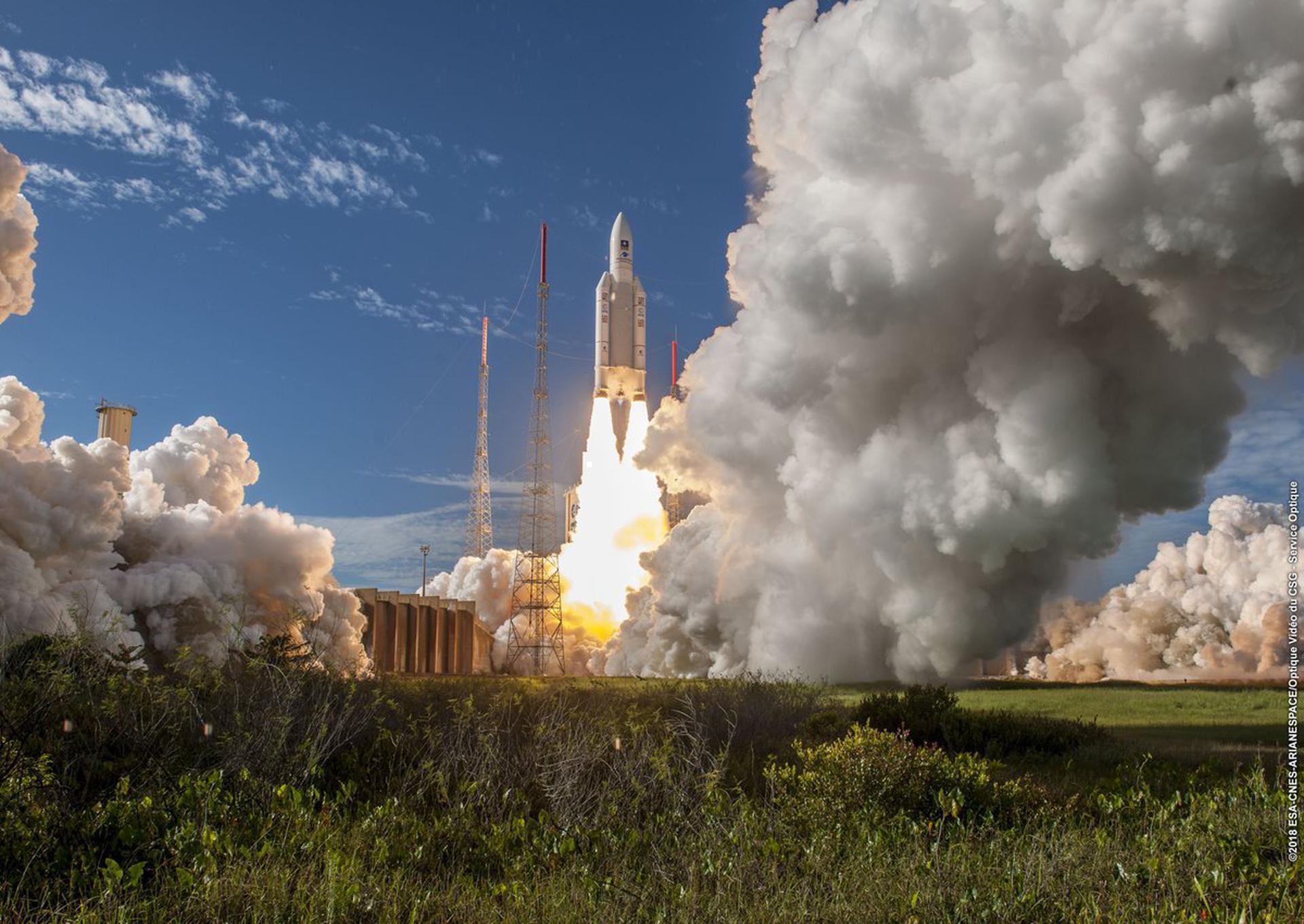
The Ariane 5 ES (Evolution Storable) has an estimated LEO launch capacity of 21,000 kg (46,000 lb). It includes all the performance improvements of Ariane 5 ECA core and boosters but replaces the ESC-A second stage with the restartable EPS used on Ariane 5 GS variants. It was used to launch the Automated Transfer Vehicle (ATV) into a 260 km circular low Earth orbit inclined at 51.6° and has been used 3 times to launch 4 Galileo navigation satellites at a time directly into their operational orbit. The Ariane 5 ES flew 8 times from 2008 to 2018 with no failures.
Kennzahlen
🧐 Datenprüfung
Automatische Plausibilitätsprüfung — Auffälligkeiten werden hier transparent gemacht:
- ℹ️Die Zahlen oben gelten nur für die Variante „Ariane 5 ES“. Die Launch Library zählt je Variante getrennt — die Familie Ariane, Ariane 5 kommt über 6 Varianten auf insgesamt 117 Starts.
Technik
Triebwerke & Treibstoff
| Booster | 2× EAP-Feststoffbooster (P241) | Feststoff (HTPB) |
| 1. Stufe | 1× Vulcain 2 | Flüssigwasserstoff / Flüssigsauerstoff |
| 2. Stufe | 1× HM7B (ECA) | Flüssigwasserstoff / Flüssigsauerstoff |
Triebwerks- und Treibstoffangaben aus kuratierten Quellen: Wikipedia — Ariane 5
Starts pro Jahr
davon in unserer Datenbank: 8
Geschichte & Ereignisse
Quellen
- Launch Library 2 (The Space Devs)
- Wikipedia